
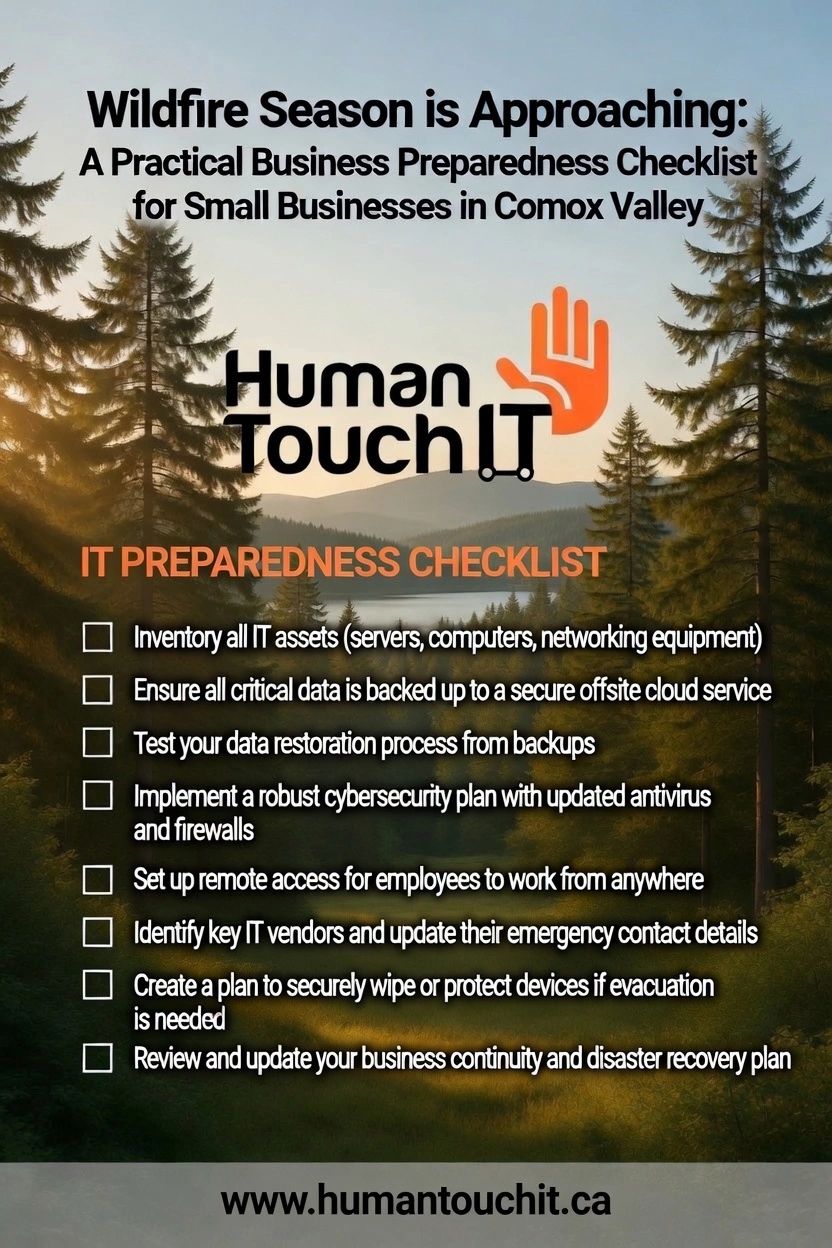
Wildfire Season is Approaching: A Practical Business Continuity Checklist for Small Businesses in Comox Valley
Wildfire season is once again approaching on Vancouver Island, and many small businesses in the Comox Valley are still not properly prepared. While large companies usually have formal business continuity plans, most small business owners are focused on day-to-day operations and often don’t have a clear plan for when disruptions happen.
Power outages, evacuation orders, internet failures, or even staff being unable to reach the office can seriously impact revenue and customer trust. The good news is that you don’t need a complicated corporate plan. You just need a practical and realistic approach focused on what really matters for your business.
Here’s a simple Business Continuity Checklist tailored for small businesses in Comox Valley:
1. Identify What Keeps Your Business Running
Start by understanding your priorities. Instead of trying to protect everything, focus on the activities that generate most of your revenue.
Ask yourself:
- Which 2 or 3 things would hurt my business the most if they stopped for a few days?
- Which customers or services are time-sensitive?
This clarity helps you direct your efforts where they matter most.
2. Protect Your Data and Technology
This is one of the biggest vulnerabilities for small businesses. Many still rely on local computers without proper backups.
Key actions:
- Move your important files and email to the cloud (Microsoft 365 is usually the most practical option).
- Set up automatic backups and test that you can actually restore files.
- Make sure you can access your systems remotely if your office becomes inaccessible.
- Keep a secure offline copy of critical documents and passwords.
3. Create a Simple Communication Plan
During a crisis, your customers need to hear from you quickly. Having a basic communication plan avoids confusion and helps maintain trust.
- Keep an updated list of your most important customers and suppliers.
- Decide in advance how you will notify them (email, text message, or social media).
- Prepare short message templates so you’re not writing under pressure.
4. Prepare for Remote Operations
Many businesses were forced to figure this out during the pandemic, but systems often become outdated over time.
Consider the following:
- Can your team work from home if the office is inaccessible?
- Do you have secure remote access to your important systems?
- What would you do if you couldn’t use your physical location for several days?
Even basic remote access capabilities can make a significant difference.
5. Review Your Key People and Processes
In small businesses, a lot of critical knowledge often sits with just one or two people.
- Document the most important tasks so someone else can follow them if needed.
- Identify who can step in if a key person becomes unavailable.
- Consider simple cross-training for your most critical functions.
6. Test Your Plan
You don’t need to run a full emergency drill. However, it’s important to test your ability to work remotely and access your systems at least twice a year.
A quick tabletop exercise — imagining a wildfire evacuation order tomorrow — can reveal gaps in your current setup.
Get the Full Checklist for Free
If you want a ready-to-use Business Continuity Checklist specifically designed for small businesses in Comox Valley, I’m happy to send it to you at no cost.
Just send me a message and I’ll review your current situation and share a personalized version of the checklist. It only takes a few minutes and can give you much more clarity on where you stand before wildfire season arrives.